
HomeFood PrintersWhat Is an Edible Ink Printer?
An edible ink printer is a specialized printing device designed to create food-safe images, designs and text on edible surfaces or edible sheets. Unlike conventional office printers, edible printing equipment uses inks intended for food applications and is dedicated to edible production.
MPrint has been developing printing equipment since 2009 and has operated from Lithuania since 2022. MPrint printers are designed and assembled in Lithuania for different production needs, including Junior Food, FoodBox, Aternis and Sugarer.
Edible inks are typically water-based formulations containing food-grade liquid carriers and humectants, permitted food colourants and acidity regulators. Ingredients such as E1520, E422 and E330 may be used in some formulations, while the exact colourants vary by ink colour and manufacturer.
Because formulations differ between manufacturers and colours, the exact composition should always be checked on the product label and supporting documentation.
MPrint supplies EU-certified edible inks from European producers. Conventional printer ink is not intended for food contact and must not be used for edible printing.
Edible printers can be used for direct printing on confectionery products or for printing images on edible sheets, depending on the printer model and application.
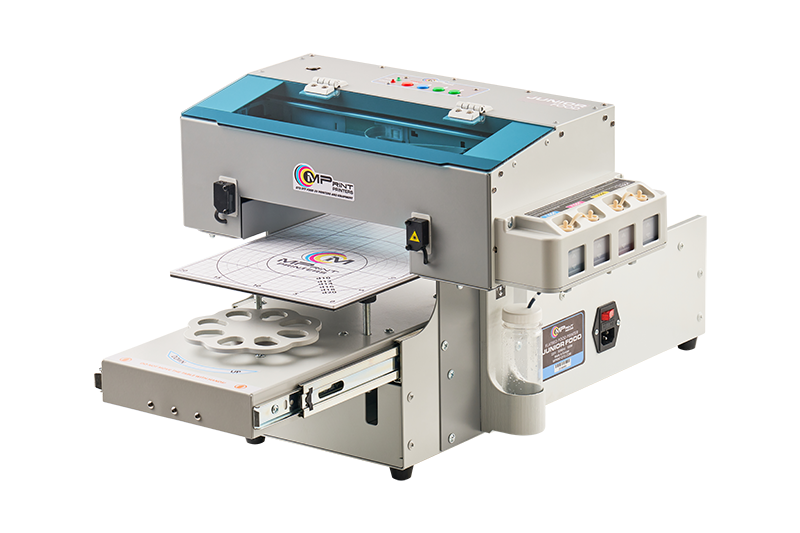
Junior Food prints directly on gingerbread, cookies, macarons, chocolate and small confectionery products. It has a 20 × 30 cm working area, supports products up to 8 cm high and can handle up to approximately 250 small items per hour depending on item size and layout.
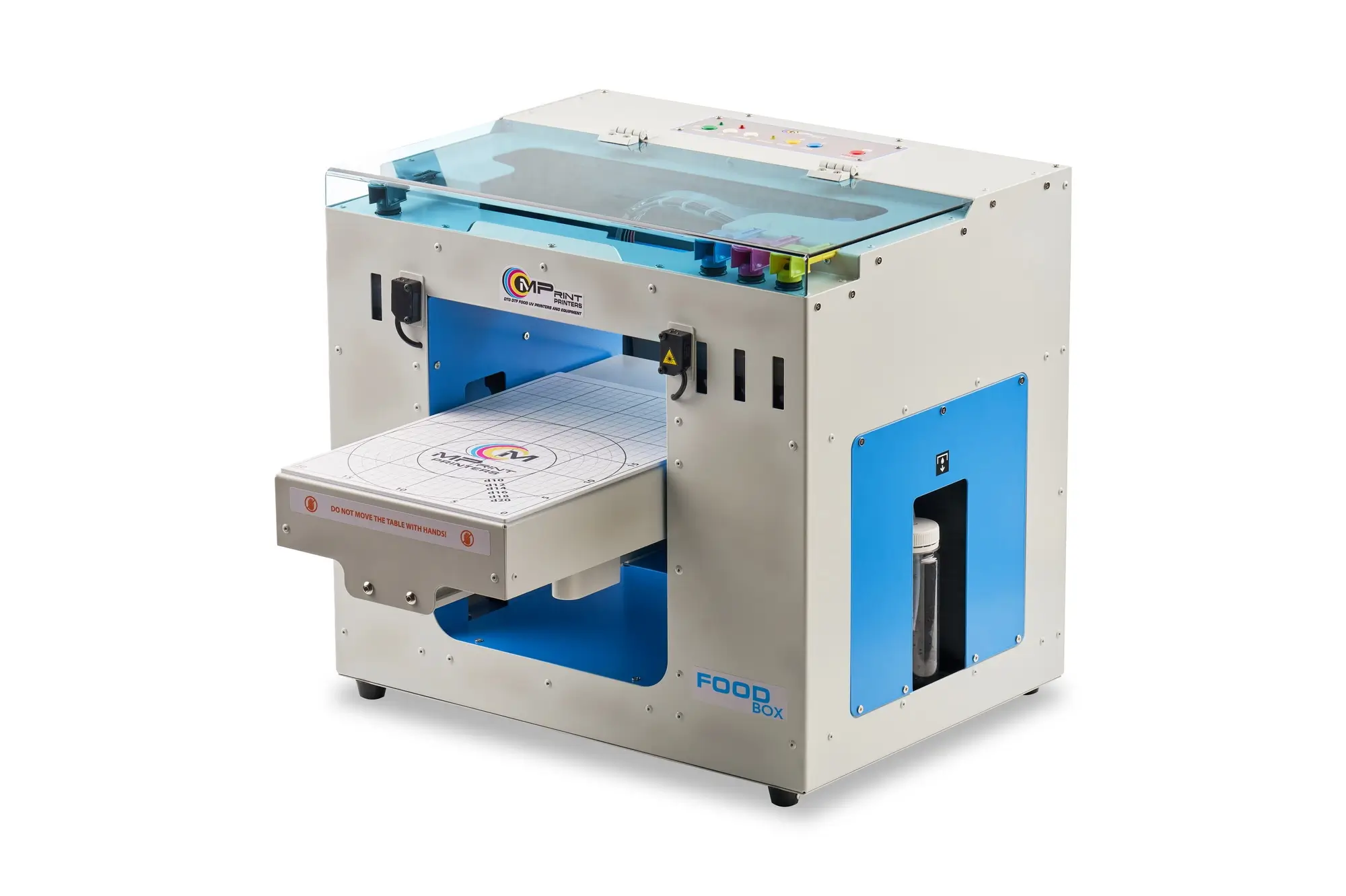
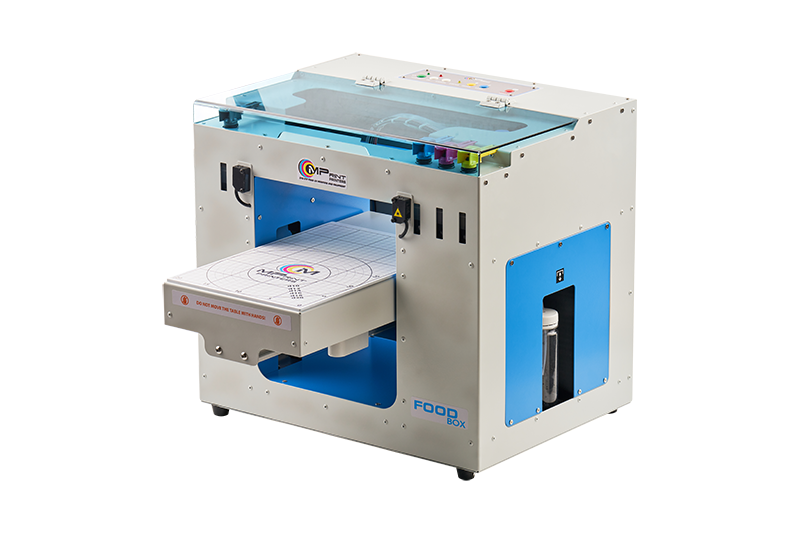
FoodBox is designed for direct printing on cakes, mousse desserts, mirror glaze, cookies, macarons and other confectionery products. It has a 20 × 30 cm working area and supports products up to 16 cm high.
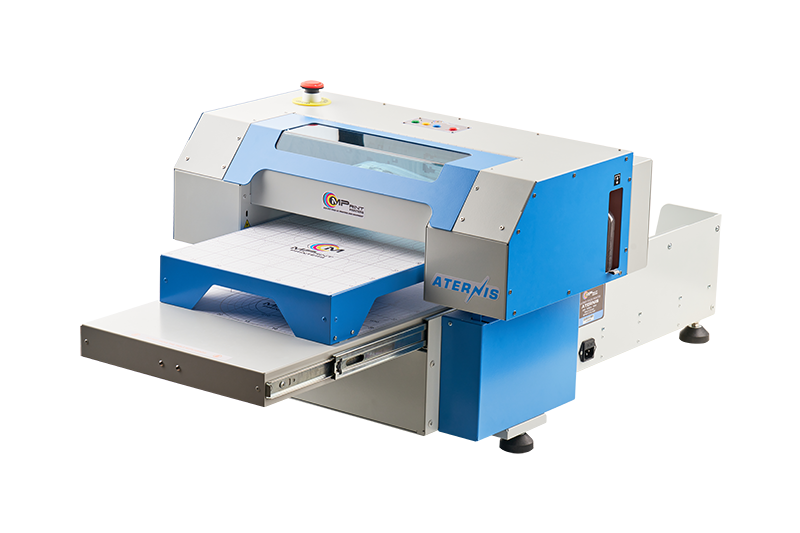
Aternis is a larger-format flatbed edible printer with a 30 × 42 cm working area, product height up to 16 cm and maximum print resolution up to 5760 × 1440 dpi. It is suitable for larger layouts and higher production requirements. Price: €5,000 excluding VAT.
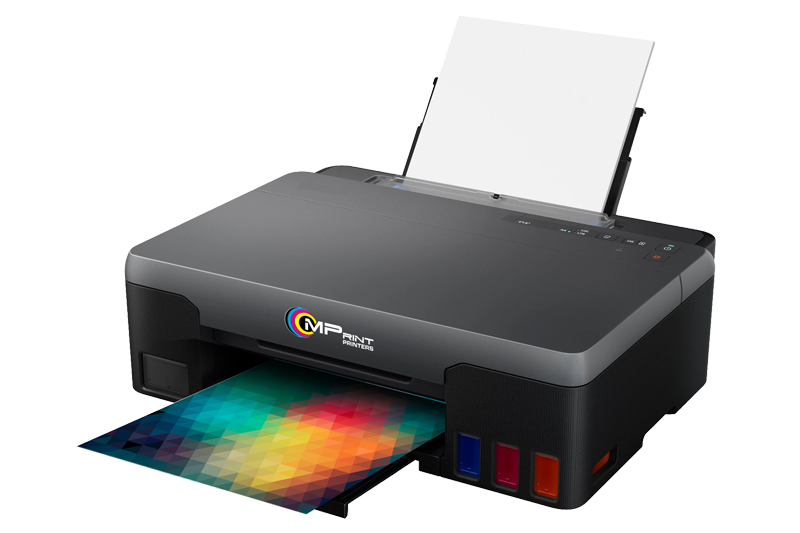
Sugarer is an A4 edible image printer for compatible edible sheets. It offers maximum resolution up to 4800 × 1200 dpi and provides an affordable entry point for edible sheet printing. Price: €450 excluding VAT.
Typical applications include personalized birthday and wedding cakes, corporate desserts with logos, custom cookies, branded macarons, chocolate decorations and themed confectionery.
Edible printers are dedicated to food applications and use edible inks instead of conventional ink. Equipment intended for edible printing should not previously have been used with standard printer inks.
A printer previously used with conventional ink may retain non-food ink residues inside the print head, ink pathways or other internal components. Replacing the cartridges does not guarantee that these residues are removed.
For food applications, use a new printer or a dedicated edible printing system that has never been exposed to conventional ink.
| Feature | Standard Printer | Dedicated Edible Printer |
|---|---|---|
| Ink | Conventional ink, not intended for food contact | Edible ink intended for food printing |
| Intended use | Paper and office/media printing | Edible sheets and/or direct-to-food printing, depending on model |
| Product handling | Designed mainly for thin media | May use edible-sheet feeding or flatbed product positioning |
| Food contamination risk | Not suitable for edible use after conventional ink exposure | Dedicated to food applications when used and maintained correctly |
| Maintenance | General office-printing maintenance | Maintenance adapted to edible inks and food-printing use |
First, prepare or select the artwork in graphic software. Then send the design to the printer. Depending on the model, the printer applies edible ink directly onto the product or onto an edible sheet.
Logos, photographs, illustrations and text can be prepared in standard graphic software. The design should be sized for the required print area and product dimensions.
Sugarer is designed for straightforward edible-sheet printing and does not require specialized proprietary design software.
For edible-sheet printing, the sheet is loaded according to the printer and media manufacturer's instructions. The printer applies edible ink using inkjet technology suitable for edible applications.
Drying time depends on the sheet type, ink coverage and environmental conditions. Always follow the edible-sheet manufacturer's handling instructions.
Edible paper specifications vary between manufacturers. The ranges below are typical examples rather than universal limits.
Application method depends on the edible sheet type. Wafer paper, sugar/fondant paper and icing sheets can require different handling and application methods, so the sheet manufacturer's instructions should always be followed.
The printer should be dedicated exclusively to edible applications and must not previously have been used with conventional ink.
Edible-sheet printers should handle compatible edible media reliably. Direct-to-food flatbed printers should provide stable product positioning and sufficient working height for the intended products.
Edible inks require correct maintenance to maintain stable print quality. Service access and technical support are important, especially for commercial use.
FoodBox and Aternis use integrated 5-colour continuous ink supply systems (CISS). The exact ink-system configuration depends on the printer model.
High print resolution helps reproduce photographs, logos and fine details. Junior Food and Aternis support maximum print resolution up to 5760 × 1440 dpi, while Sugarer supports up to 4800 × 1200 dpi.
Some MPrint models use Canon-compatible or Epson-based inkjet technology, while the complete printer is designed and assembled specifically for edible printing applications.
| Model | Price excl. VAT | Working Area | Max Height | Best For |
|---|---|---|---|---|
| Sugarer | €450 | A4 | Sheets only | Edible-sheet printing |
| Junior Food | €1,500 | 20 × 30 cm | 8 cm | Small direct-to-food products |
| FoodBox | €2,700 | 20 × 30 cm | 16 cm | Cakes and taller desserts |
| Aternis | €5,000 | 30 × 42 cm | 16 cm | Larger layouts and production batches |
MPrint printers are designed and assembled in Lithuania. All models are supplied with a 12-month warranty, training after purchase and technical support.
Before invoicing, MPrint confirms the printer model, configuration, consumables, delivery cost and estimated delivery time.
If equipment is in stock, preparation normally takes approximately 1–3 working days. Typical transportation time is approximately 2–8 working days after shipment, depending on destination and carrier.
Edible inks, cleaning solution, edible sheets and other consumables are purchased separately and can be added to the order according to the selected printer model and application.
Regular use, correct ink levels and cleaning according to the printer manual help maintain stable print quality and reduce the risk of dried ink in the nozzles. Maintenance frequency depends on usage and periods of inactivity.
If print-quality problems persist after standard cleaning, contact MPrint technical support before performing deeper service procedures.
Edible ink can dry in the nozzles after periods of inactivity. Regular operation, correct ink storage and maintenance according to the printer instructions help reduce this risk.
MPrint provides technical support by phone, email, WhatsApp and remote connection, including AnyDesk.
Important factors include dedicated food-printing use, suitable product or media handling, working area, maximum product height, print quality, maintenance access, technical support and availability of edible inks and consumables.
A printer previously used with conventional ink should not be used for edible printing. For food applications, use a new dedicated printer that has never been exposed to conventional ink.
Common options include wafer paper, rice or rice-wafer paper, sugar/fondant paper and icing/frosting sheets. Thickness, shelf life, composition and application method vary by manufacturer.
MPrint offers Sugarer from €450 excluding VAT, Junior Food from €1,500 excluding VAT and FoodBox from €2,700 excluding VAT. Aternis is available from €5,000 excluding VAT for larger-format applications.
The best model depends on your products and production requirements. Junior Food is suitable for smaller direct-to-food products, FoodBox provides greater available product height, Aternis provides a larger 30 × 42 cm working area, and Sugarer is designed for edible-sheet printing.
No. On direct-to-food models with laser height setting, the laser determines the highest point before printing and the printer sets one working height for the entire print cycle. The height is not dynamically adjusted during printing.
When multiple products are printed during the same cycle, we recommend keeping the difference in printing-surface height to approximately 4 mm or less.
Edible inks and other consumables are purchased separately and can be added to the order according to the selected printer and application.
Tell us what products you plan to print, their dimensions and your expected production volume. MPrint will help you choose the most suitable printer and consumables.