
HomeFood PrintersEdible Printer for Sugar Paper and Icing Sheets
An edible paper printer is designed to print photos, logos, inscriptions and decorative graphics on edible sheets using edible inks. Depending on the material and application, edible images can then be used for cakes, cookies, cupcakes, desserts and other confectionery products.
Printing on sugar paper, icing sheets and wafer paper
EU-certified edible inks
Training and technical support after purchase

Edible image printing uses a dedicated printer, edible inks and compatible edible sheets to create food-safe printed decorations. The image is prepared digitally, printed onto the edible material and then applied to the finished confectionery product according to the sheet manufacturer's instructions.
For personalized cake decorations, edible photos, logos and custom orders.
To expand the product range with themed, seasonal and branded edible decorations.
For repeatable production, seasonal collections and corporate orders.
For small batches, individual projects and personalized cake decorations.
Print names, photos, logos and individual designs for each order.
Switch to a new design without preparing molds, stamps or dies.
Create edible logos and branded cake decorations for companies, events and promotional products.
Adapt designs for Christmas, Easter, Valentine's Day, weddings, birthdays and children's celebrations.
Edible images can be prepared in common file formats such as JPG, PNG and PDF and adjusted to the required sheet size.
For corporate cakes, events and branded confectionery products.
For portraits, illustrations, decorative graphics and custom designs.
For birthdays, weddings, anniversaries and other personalized orders.
For themed cakes, children's parties and personalized decorations.
For Christmas, Easter, Valentine's Day, Women's Day and other seasonal occasions.
For edible decorations with logos, inscriptions and visual branding.
01
Prepare the design according to the required sheet size. A resolution of around 300 DPI at final print size is a useful guideline for detailed edible images, while lower-resolution source images may limit print quality.
02
Load the compatible edible sheet according to the printer and media manufacturer's instructions. Sheet handling differs between sugar paper, icing sheets, wafer paper and other edible materials.
03
The printer applies edible ink directly to the edible sheet. On Sugarer, a full A4 print typically takes approximately 2–3 minutes depending on the artwork and print settings.
04
Allow the printed sheet to dry before handling or application. Drying time depends on ink coverage, sheet type and environmental conditions.
05
Application method depends on the edible sheet type and the surface of the confectionery product. Wafer paper, sugar/fondant paper and icing sheets may require different handling, so always follow the sheet manufacturer's instructions.
Edible paper thickness and shelf life vary by manufacturer. The values below are typical practical ranges rather than universal limits.
Edible inks are typically water-based formulations containing food-grade liquid carriers and humectants, permitted food colourants and acidity regulators. Ingredients such as E1520, E422 and E330 may be used in some formulations, while the exact colourants vary by ink colour and manufacturer.
MPrint supplies EU-certified edible inks from European producers. Exact composition should always be checked on the product label and supporting documentation.
Conventional printer ink is not intended for food contact. A printer used for edible printing should be dedicated to food applications and should not previously have been used with standard printer ink.
| Feature | Regular Printer | Dedicated Edible Printer |
|---|---|---|
| Ink | Conventional ink not intended for food contact | Edible ink intended for food printing |
| Previous use | May contain residues of conventional ink | Dedicated to food applications |
| Media | Designed for office/photo media | Compatible edible sheets depending on model |
| Food use | Not suitable after conventional ink exposure | Suitable when used and maintained correctly for edible printing |
Sugarer supports USB and Wi-Fi connectivity and uses a built-in continuous ink supply system (CISS). No specialized proprietary design software is required.
JPG, PNG and PDF are common formats for edible image printing. For detailed work, preparing the artwork at approximately 300 DPI at final size is a practical guideline.
RGB artwork is generally convenient for normal design workflows. Final colour appearance can vary depending on the edible ink, sheet surface, source image and printer settings.
The best model depends on whether the main task is printing edible sheets or direct printing on food products.

Sugarer is MPrint's dedicated A4 solution for printing edible images on compatible edible sheets.
Junior Food is primarily a direct-to-food flatbed printer with a 20 × 30 cm working area and maximum product height up to 8 cm. It is suitable for cookies, macarons, chocolate and other small confectionery products. Flat compatible edible materials may also be used where appropriate, but Sugarer is the more dedicated choice for routine A4 edible-sheet printing.
FoodBox is a direct-to-food flatbed printer with a 20 × 30 cm working area and maximum product height up to 16 cm. It is designed mainly for cakes, mousse desserts, mirror glaze and other confectionery products.
Aternis is a larger-format direct-to-food flatbed printer with a 30 × 42 cm working area, maximum product height up to 16 cm and maximum resolution up to 5760 × 1440 dpi. It is intended for larger layouts and higher production requirements.
The cost of edible image printing depends on the sheet type, supplier, package size, ink coverage and artwork.
MPrint edible CMYK ink is available as a set of four 100 ml bottles for €45.
Because edible sheets and designs vary significantly, it is more accurate to calculate cost per print from the actual sheet purchase price and ink coverage rather than use one fixed cost for every A4 image.
MPrint printers are supplied with a 12-month warranty covering manufacturing defects under normal operation. Training is provided after purchase, and remote technical support is available, including assistance via AnyDesk.
Edible inks, cleaning solution, edible sheets and other consumables are purchased separately and can be added to the order according to the selected printer and application.
Smudging can occur if a printed sheet is handled before the ink has dried sufficiently. Allow the print to dry and follow the sheet manufacturer's handling instructions.
Inkjet print quality can be affected by dried ink in the nozzles. Regular use and cleaning according to the printer manual help maintain stable print quality.
Horizontal banding can indicate a nozzle, alignment or media-handling issue. Run the normal printer checks described in the model instructions.
Store edible sheets sealed, dry and protected from heat, direct sunlight and excess humidity. Follow the storage conditions and expiry date specified by the sheet manufacturer.
If a print-quality problem persists after standard cleaning or setup checks, contact MPrint technical support before performing deeper service procedures.
Typical applications include:
Photos printed on sugar paper
Logos on icing sheets
Wafer paper decorations
Birthday and wedding cake images
Corporate cake decorations
Personalized edible toppers
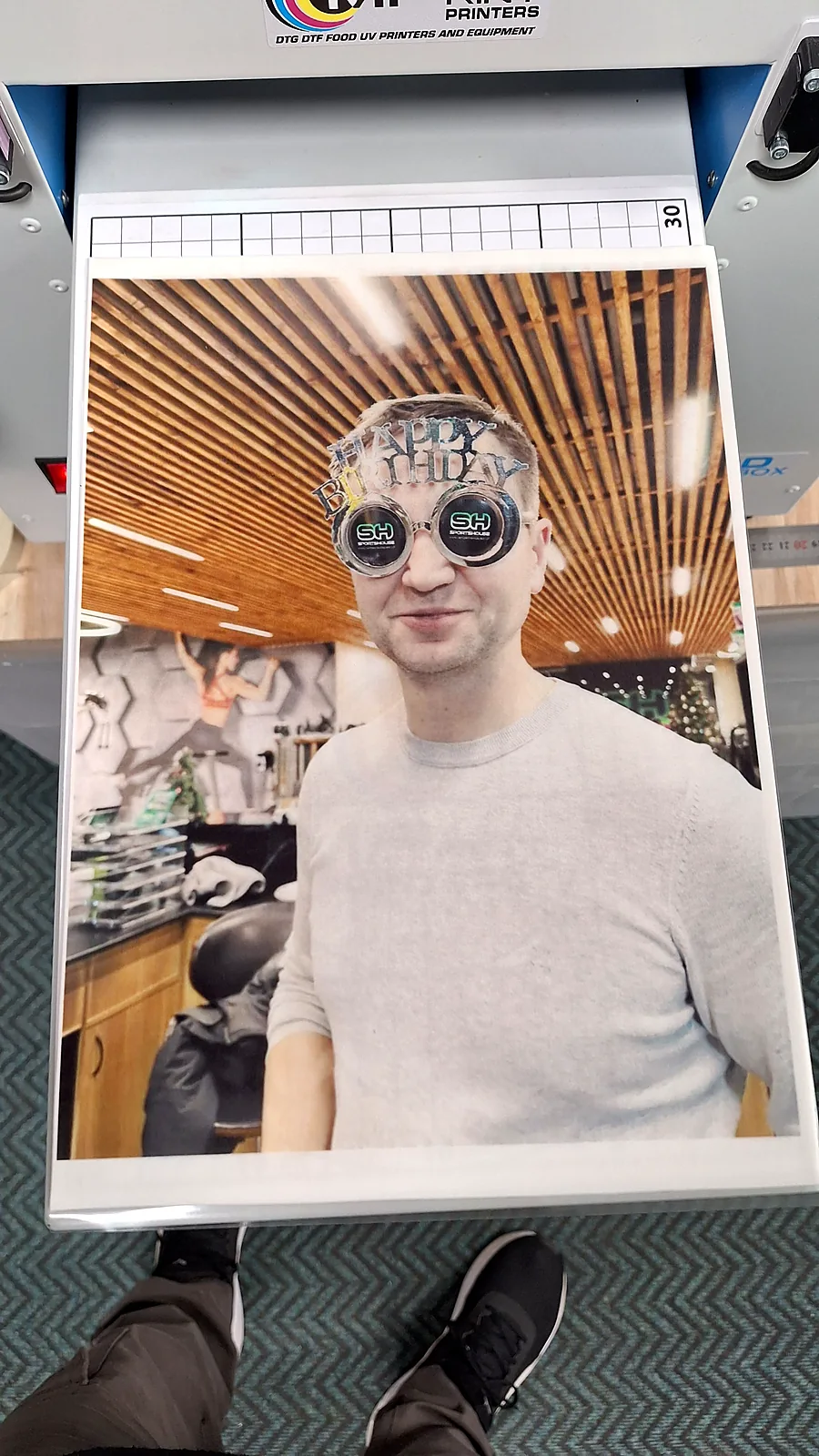
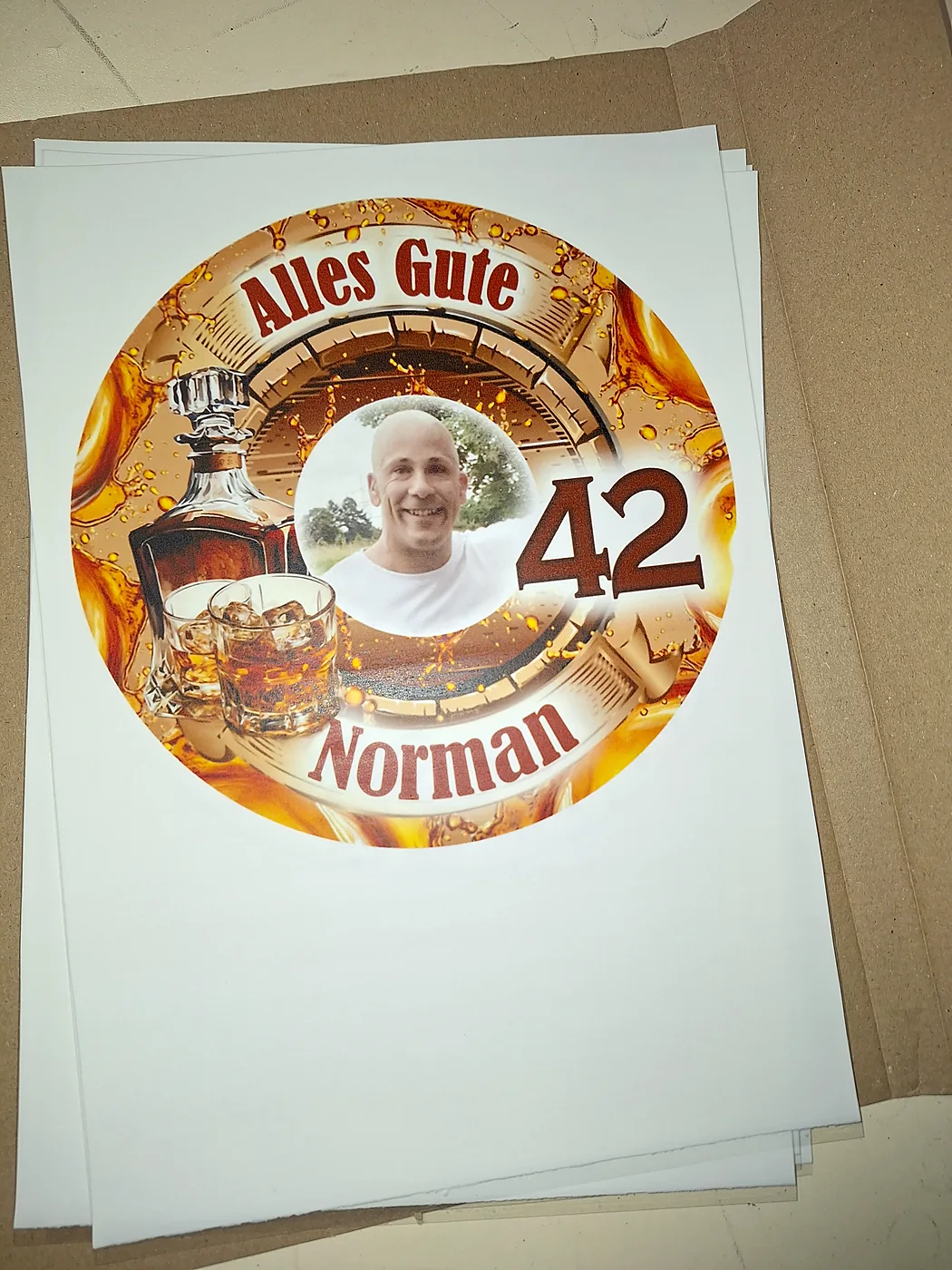

Some edible printing systems use Canon-compatible or other established inkjet technologies as part of their printing architecture. What matters for food use is that the complete printer is dedicated to edible printing and has never been used with conventional ink.
MPrint printers are designed and assembled in Lithuania for edible printing applications.
Yes. Sugarer is designed for compatible edible sheets including sugar paper, icing sheets, wafer paper and rice / rice-wafer paper.
Use a flat, dry sheet that is compatible with the printer. Keep the material in its protective packaging until required and follow the sheet manufacturer's handling instructions.
Yes. You can print photographs, company logos, names, inscriptions and colourful graphics.
On Sugarer, a full A4 print typically takes approximately 2–3 minutes depending on the design and print settings.
Sugarer supports maximum resolution up to 4800 × 1200 dpi.
Yes. Sugarer supports both USB and Wi-Fi connectivity.
Sugarer uses a built-in continuous ink supply system (CISS).
No. Edible inks and other consumables are purchased separately. A CMYK set of four 100 ml edible ink bottles costs €45.
Yes. MPrint provides training after purchase and remote technical support.
Yes. Tell us what edible sheets and products you plan to use, and we will recommend the most suitable printer and consumables.
Tell us what edible materials you plan to print and your expected production volume. MPrint will help you choose the most suitable printer and consumables.