
Home Food Printers Food Printer for Cakes
MPrint food printers allow you to print edible images, logos, photos, names and decorative graphics directly on suitable cake and dessert surfaces using edible inks. Direct printing is suitable for cakes, mousse desserts, mirror glaze and other confectionery products with a stable, printable surface. Depending on the application, edible sheets such as frosting sheets, icing sheets and wafer paper can also be used.
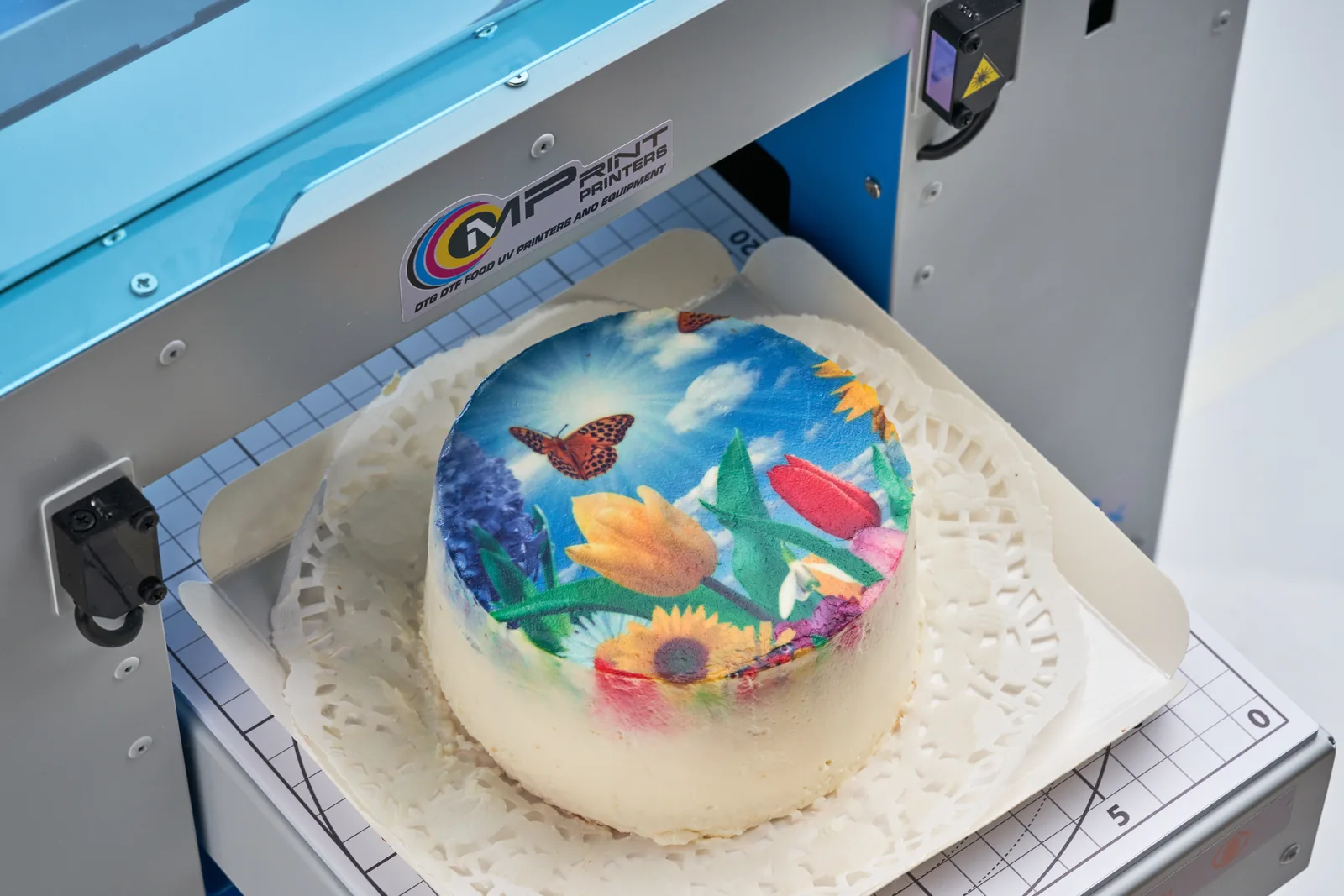
For personalized cakes, desserts and custom orders with individual edible graphics.
For expanding the product range and producing themed or seasonal confectionery.
For repeatable branded products, seasonal collections and corporate orders.
For small batches, custom cakes and personalized desserts. The most suitable printer depends on product height and dimensions.
For corporate cakes, branded desserts, events, cafés, hotels and promotional orders.
Portraits, illustrations, decorative graphics and other personalized edible images can be printed on suitable surfaces.
Personalized text for birthdays, weddings, anniversaries, holidays and individual orders.
Decorative elements for Christmas, Easter, Valentine's Day, children's parties, weddings and other occasions.
The graphic is prepared according to the product dimensions and the working area of the selected printer.
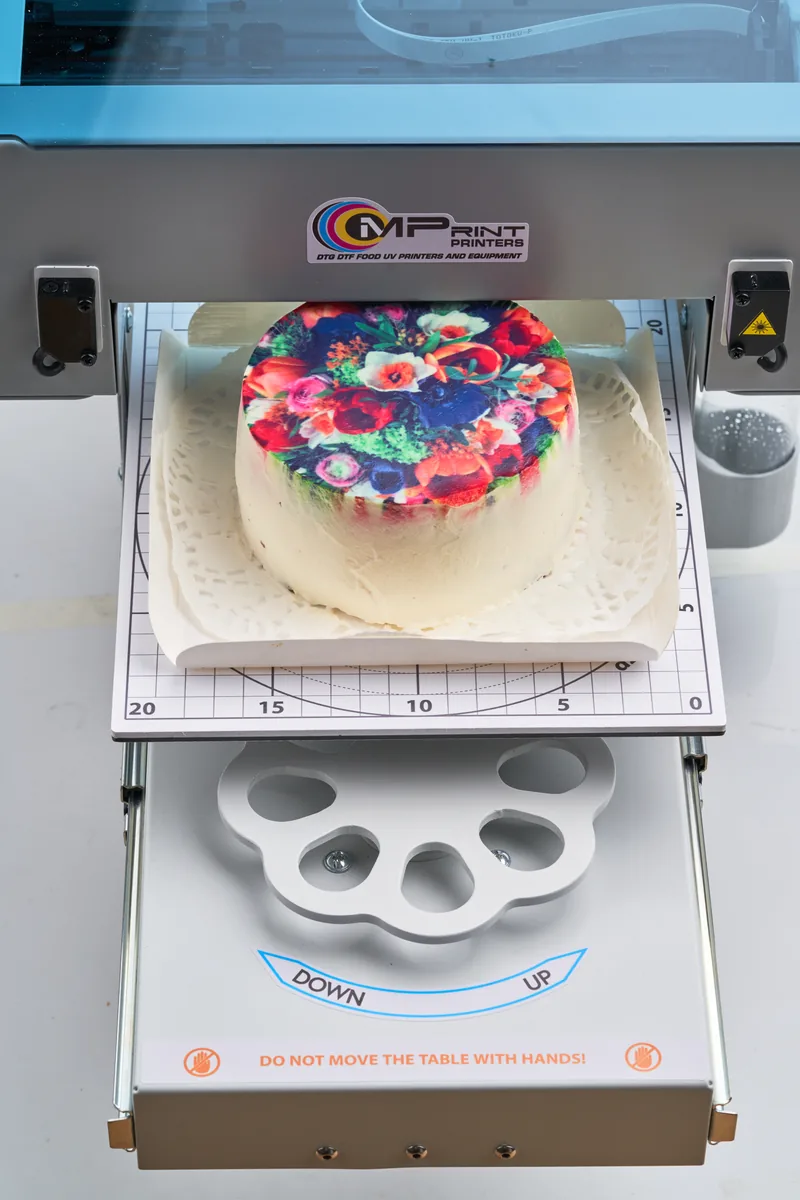
Cakes or desserts are placed securely on the printer table. Multiple products can be arranged within the working area when their height difference remains within the recommended range.
Before printing, the laser determines the highest point of the product or group of products and sets the working height.
The printer applies the image directly to the printable surface using edible CMYK inks.
Allow approximately 5–10 minutes for the edible ink to dry before further handling or packing. Actual drying time depends on the surface, ink coverage and environmental conditions. Mirror glaze, mousse coatings and other surfaces may require different drying times.
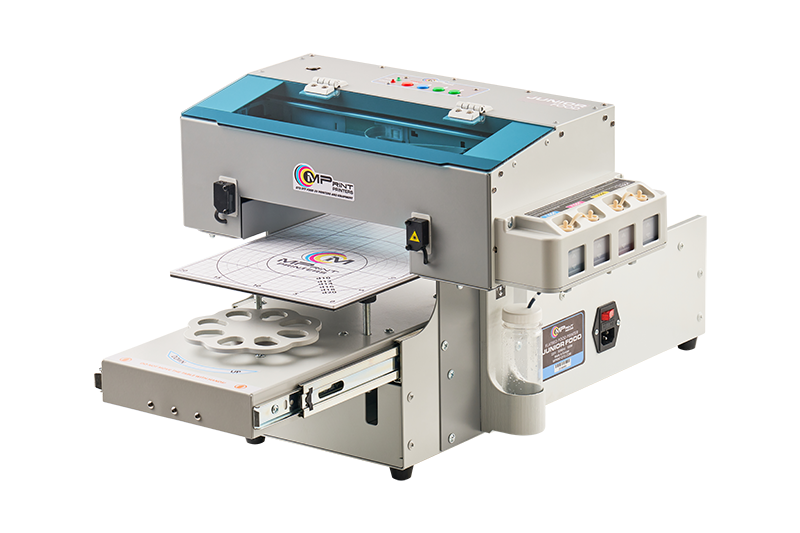
Compact edible printer for smaller products and low cakes
Junior Food is best suited to cookies, macarons, chocolates, small desserts and lower confectionery products.
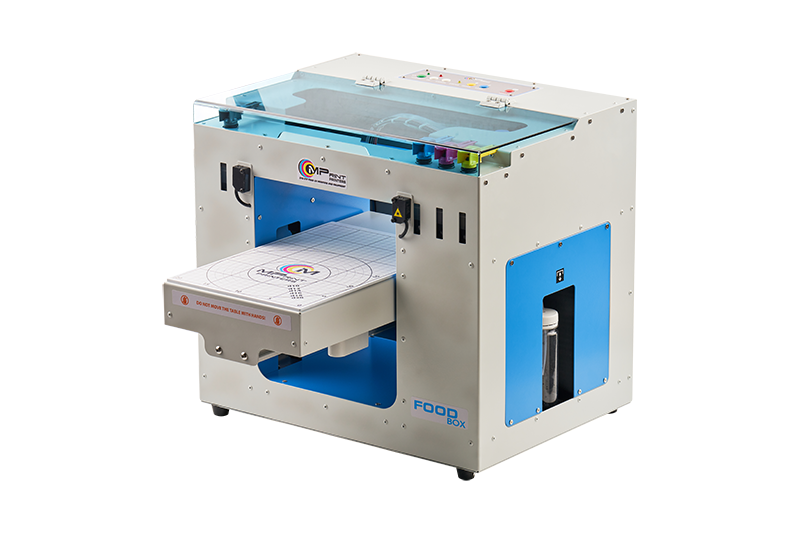
Food printer for cakes and taller desserts
FoodBox is particularly suitable for cakes, mousse desserts, mirror glaze and other products that require greater available height.
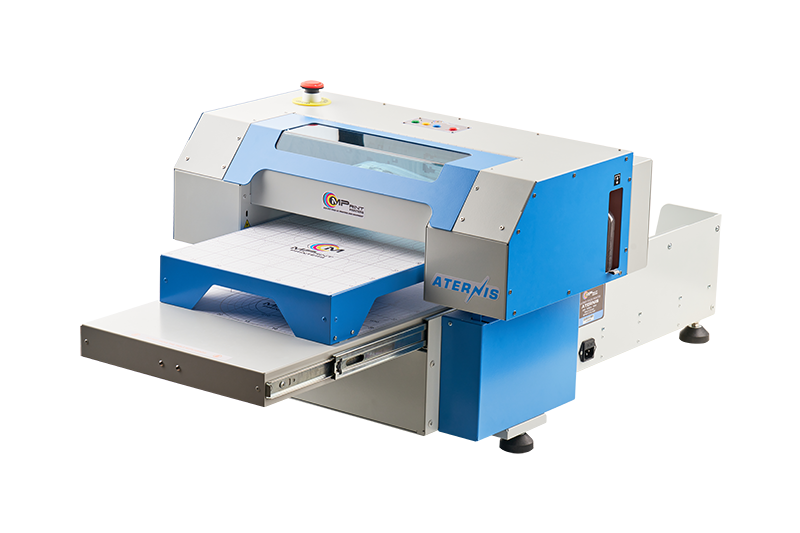
Larger-format edible printer for cakes and production batches
Aternis is suitable for larger cakes, larger layouts and higher production requirements.
A4 edible image printer for edible sheets
Sugarer is intended for printing edible images on sheets rather than direct printing on tall cakes or desserts. Not sure which printer is best for your products? Contact us and we will help you choose a model based on product size, height and production volume.
Tell us the size and height of the cakes or desserts you plan to print, and we will help you select the most suitable MPrint printer.
MPrint food printers can be used for:
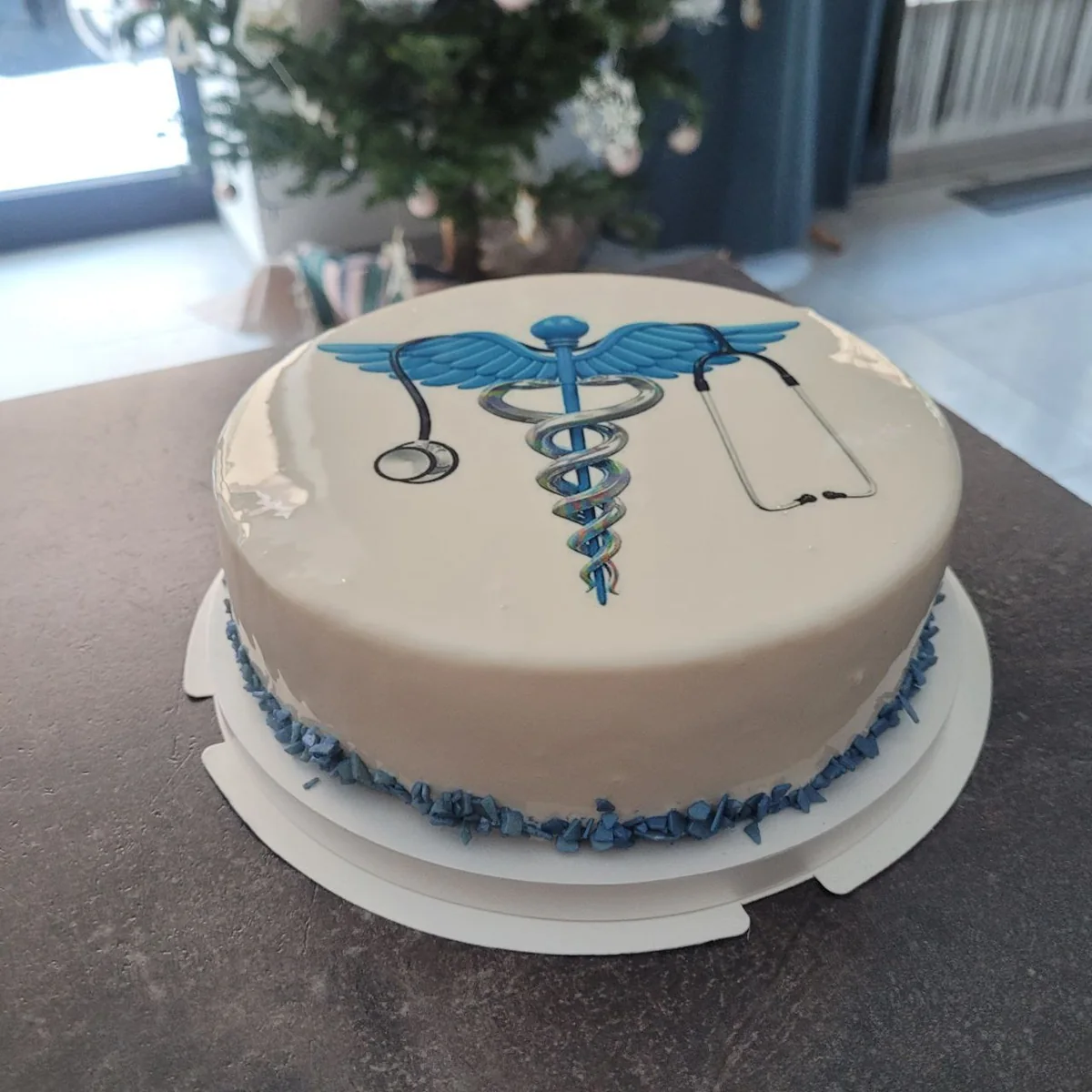
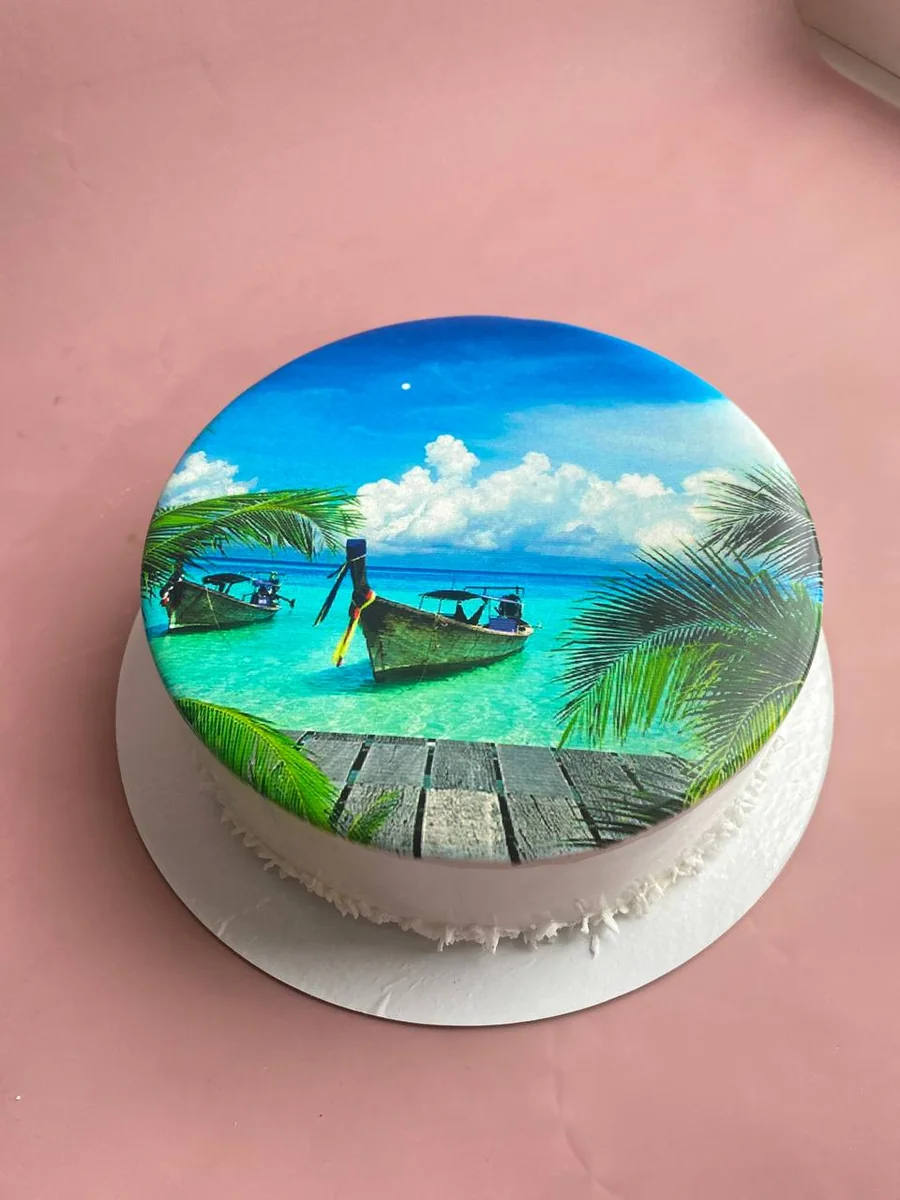
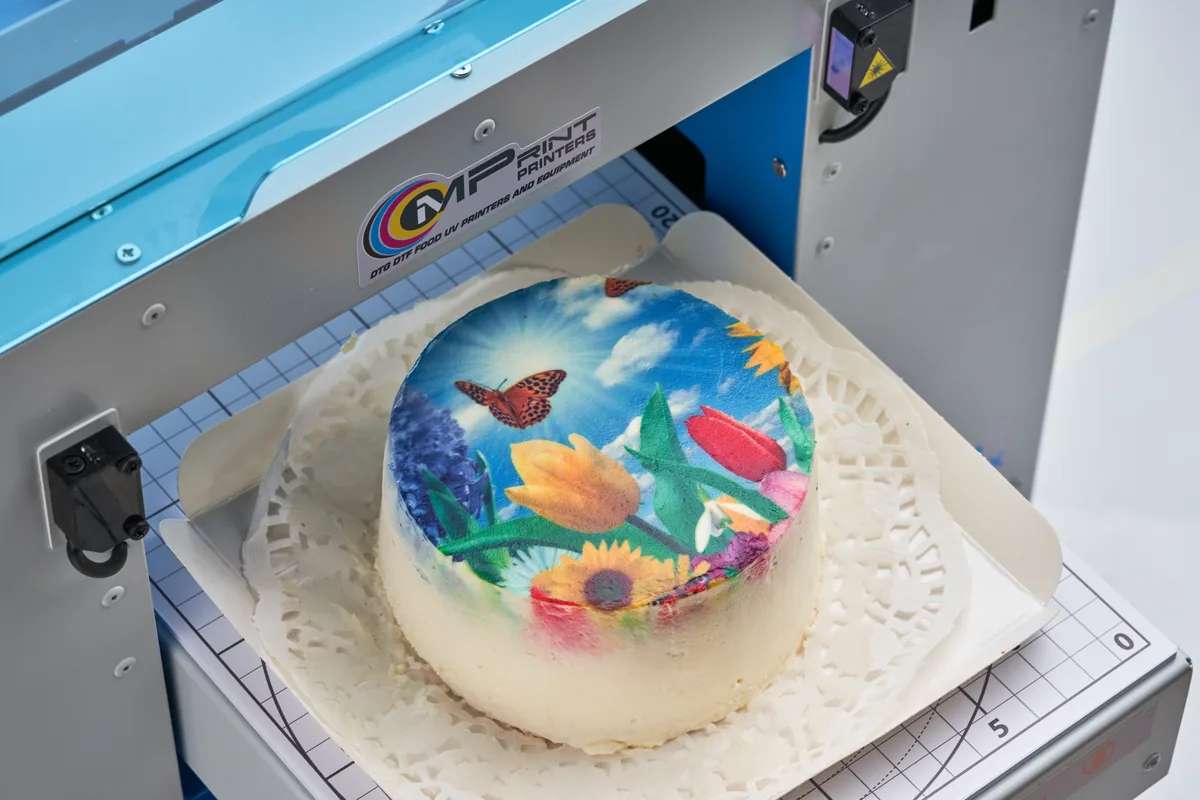
Create custom cakes and desserts with names, photos, logos, illustrations and individual designs using edible inks.
Switch from birthday designs to wedding graphics, seasonal decorations or corporate logos without preparing molds, stamps or printing plates.
Print company logos and branded graphics on cakes and desserts for events, cafés, hotels, exhibitions and corporate gifts.
Quickly adapt designs for Christmas, Easter, Valentine's Day, weddings, birthdays and other seasonal occasions.
An edible printer uses edible inks intended for food printing instead of conventional printer ink. Depending on the model and application, the image can be printed directly onto the product surface or onto an edible sheet.
A conventional printer that has been used with standard ink should not be used for food printing. Equipment intended for edible printing should use only edible inks and should be dedicated to food applications to avoid contamination with non-food inks.
No. Mechanical compatibility with a cartridge or print system does not make an ink suitable for food use. Edible inks should be specifically intended for food printing and supplied with the appropriate food-safety documentation.
For customers in Europe, we recommend using edible inks intended for food applications and supplied with the relevant EU documentation. MPrint supplies EU-certified edible inks from European producers.
Depending on the printer and application, common edible printing materials include:
FoodBox and Aternis are suitable for direct printing on cakes, mousse desserts, mirror glaze and other confectionery products. The choice depends mainly on product height, working area and production volume.
Direct-to-food printers can also be used for cookies, gingerbread, macarons, chocolates and other confectionery products. Junior Food is a compact option for smaller and lower products.
Edible printers can reproduce photos, logos, inscriptions and graphics for birthdays, weddings, corporate events and personalized orders.
Aternis provides a larger 30 × 42 cm working area for larger layouts, cakes and higher production requirements.
Professional direct-to-food models combine a flat working table, edible CMYK inks and laser-based height setting. Before printing, the printer determines the highest point of the product and sets the working height accordingly. The height is not dynamically adjusted during the printing process.
Sugarer is an A4 edible image printer intended for printing on edible sheets such as sugar paper, wafer paper and rice paper.
For direct printing, the maximum product height is important.
Choose a working area based on the size of cakes, desserts or the number of products you want to arrange on the table.
When several products are printed during the same cycle, we recommend keeping the difference in printing-surface height to approximately 4 mm or less. The laser determines the highest point before printing and the printer sets one working height for the entire printing cycle. There is no dynamic height correction while the print is in progress.
We help choose a model based on cake dimensions, product height, required working area and expected production volume.
MPrint printers are tested before shipment. We supply EU-certified edible inks and provide documentation upon request.
MPrint equipment includes a 12-month warranty, training after purchase and remote technical support.
MPrint offers different printer configurations for different applications. Direct-to-food models such as Junior Food, FoodBox and Aternis use edible CMYK inks and a flat working table. Laser height setting is used before printing to set the correct working distance. Connectivity and ink-supply configuration depend on the printer model, so individual model specifications should be checked before purchase.
Depending on the application, useful supplies may include:
Maintenance frequency depends on printer usage, ink condition and periods of inactivity. Regular use and proper cleaning help reduce the risk of dried ink in the nozzles.
One of the most common issues in inkjet food printing is ink drying in the nozzles after long periods of inactivity. Proper maintenance, regular operation and correct cleaning procedures help reduce this risk.
Maximum working areas:
There is no fixed minimum physical print size such as 5 × 5 cm. Technically, a printed element can be as small as a single pixel, while the practical visible size depends on image resolution, design detail and the printed surface.
Yes, if several products fit within the working area and their printing surfaces are at approximately the same height. We recommend keeping the height difference between products to approximately 4 mm or less. Before printing, the laser determines the highest point and the printer sets one working height for the entire cycle.
Ink consumption depends on image size, color coverage, print settings and the number of products printed per cycle. Because these factors vary significantly between jobs, there is no reliable fixed number of cakes, cookies or full-page prints that can be guaranteed from one ink set.
Edible printing can add value to personalized confectionery by allowing bakeries and confectioners to charge more for custom names, photos, logos and themed designs. As an illustrative example, if the effective printing cost is approximately €0.15–0.25 per personalized item and customization adds approximately €2–5 to the selling price, the equipment may recover its purchase cost after roughly 300–750 orders. For an active bakery, this can correspond to approximately 3–6 months, but actual ROI depends on product pricing, order volume, labor costs, ink coverage and margins. These figures are illustrative and are not a guaranteed payback period.
The ink-supply system depends on the printer model. Professional direct-to-food printers are designed for repeated edible-ink printing, while Sugarer is intended for edible-sheet printing. For the exact ink-system configuration of a specific model, check the corresponding product page or contact MPrint.
The initial cost depends on the printer model and the consumables required for your application.
Edible paper, cleaning solution, additional consumables, VAT and delivery are not included in these starter figures.
MPrint Printers operates from the Kaunas region, Lithuania, and ships equipment throughout Europe and to other countries. Typical transportation time is approximately 2–8 working days after shipment, depending on destination and carrier. For orders and consultations:
FoodBox is a strong choice for cakes and desserts up to 16 cm high within a 20 × 30 cm working area. Aternis provides a larger 30 × 42 cm working area for larger cakes and production layouts.
Yes, direct printing is possible on suitable mirror-glaze surfaces. The surface should be stable enough for printing and free from excess condensation.
Yes, provided the surface is suitable for direct edible-ink printing and the product can be positioned securely on the printer table.
Yes. Several products can be arranged within the working area. For best results, keep the difference in printing-surface height to approximately 4 mm or less.
No. Before printing, the laser determines the highest point and the working height is set for the entire printing cycle. The printer does not dynamically change height while the image is being printed.
Yes. Depending on the printer model, edible sheets can be printed separately, while direct-to-food models can print directly on suitable confectionery surfaces.
Allow approximately 5–10 minutes as a general guideline. Actual drying time depends on the surface, ink coverage and environmental conditions.
There is no fixed minimum physical size such as 5 × 5 cm. Technically, the printer can reproduce an element down to a single pixel, while the practical visible size depends on the design and surface.
Yes. MPrint provides training after purchase and remote technical support, including assistance via AnyDesk.
Yes. Send us the dimensions and height of your products together with your expected production volume, and we will recommend the most suitable model.
Tell us the size and height of the cakes or desserts you plan to print, and we will help you select the most suitable MPrint printer.